"The shape of the beach, the type of rocks or lack of rocks, the pH level [a measure of acidity and alkalinity of a solution], the type of surf the area has, all play a part in how the glass turns out," she said. "Lake Erie is fairly shallow compared to the other Great Lakes, and with a storm or wind change we get some pretty mighty waves which is why we get some nice glass here."
Lake Erie also has a pH level on a par with ocean water.
Marbles and apothecary stoppers are prized finds and happily Polach has had marbles roll up to her feet.
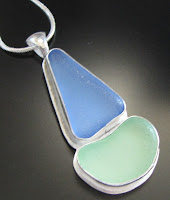
Polach, who goes by the name "beachglow" on eBay said that the jewelry that she creates often boasts shards of "sea pottery" and "end of the day" glass.
According to C.S. Lambert's "Sea Glass Chronicles: Whispers from the Past," many pieces of exquisite sea glass owe their existence to an English factory near Bristol which specialized in bottles and windows during the 18th century.
At the end of the day, workers combined the molten glass remains, resulting in a whimsical mix from which they created colorful glassware, Lambert indicated.
"These sea glass pieces that are washing up now were either discarded over the cliffs at the end of the day, or are from broken 'end of the day' glassware that was discarded as trash," Polach said. "I find it intriguing, almost haunting, to know that someone once used or loved that item that got broken or maybe lost, and I end up finding a piece of it years later."
Holly L'Hommedieu's love affair with sea glass began in early childhood. In 2003, the lifelong South Jamesport resident began to showcase in jewelry some of the exquisite glass that she found off Peconic Bay and Long Island Sound.
It is a way to treasure a piece and make it a focal point, L'Hommedieu indicated, adding that there are some pieces that she will never sell.
Remarkably, the ideal specimen, with rounded edges and no shinny spots, has been 40 years in the making, L'Hommedieu said.
In one of the foremost bibles on the subject, "Pure Sea Glass: Discovering Nature's Vanishing Gems," Richard LaMotte rates the rarity of the various colors based on more than 30,000 samples collected across the country. Although orange — most of which originates from tableware — tops the list, with the chances of finding a piece estimated at 10,000-to-1, red is the most coveted sea glass color, according to LaMotte. The color is so rare says LaMotte because of the expense: gold chloride produces the deep ruby-red color.
L'Hommedieu said that she has been lucky enough to find five red pieces during the course of decades of collecting, and she considers 2007 her banner year because of her discovery of a flawless piece of red sea glass.
Recycling and the advent of plastic and aluminum containers have put a dent in the amount of sea glass that she gleans from beaches, L'Hommedieu said, adding that she now supplements her supply with sea glass from Canada, Puerto Rico, Hawaii, California, Maine and the United Kingdom.
Sea glass from the U.K. can sell for as much as $100 per pound, she indicated. California still remains a hot spot in terms of the availability of sea glass, L'Hommedieu said.
The thrill of the hunt still makes her feel "like a kid in a candy store," L'Hommedieu said, adding that the prime time to go beachcombing is in the early morning or early evening at low tide when the broadest expanse of beach is exposed, and the sun's angle is such that its rays reflect off the glass.
L'Hommedieu warns the uninitiated to be wary of faux sea glass, which has been "machine tumbled" with grit to mimic the effects of Mother Nature.
She learned from reading LaMotte's book that there are features that no machine can duplicate, including tiny half-moon etchings created by the tossing back and forth of glass by the tides. Real pieces can also be identified by tiny chips which make them glitter while machine-tumbled glass has a "satin appearance," she said.




+of+6689.JPG)


 Posts
Posts

