Showing posts with label seaglass. Show all posts

Tuesday, August 31, 2010

Specimens of Beauty - A Sea Glass Album


When does a piece of sea glass become a treasure or gem?  As with every lifelong hobby or art collection, the beauty is of course in the eye of the beholder.  Some of the most common or "industrial" glass shards can be sculpted beautiful by sand, wind and a rugged shoreline. And some are unique because they are highly uncommon in shape, stunning in color and a rarity to find.  Here we've compiled some of our favorite Specimens of Beauty simply because we love to share.  All photos copyright: WestCoastSeaGlass.com
--------------------------------------------------------
This rainbow stack consists of Pacific Ocean pieces that have been in our collection for decades.  We've hiked, kayaked, scaled steep cliffs and hiked some more to gather these rarities.  This stack represents finds that are of like symmetry, similar size and thickness and they represent a fine example of pristine weathering and conditioning. After years of studying the history and rarity of sea glass color we have learned that true orange (not beer bottle amber) is one of, if not the rarest color of sea glass.
--------------------------------------------------------
Red is highly coveted.  Some even call it the "holy grail" of sea glass. But this little delicacy is likely our most valuable find.  Why?  It's a vintage bottle stopper top first of all; probably from a victorian style perfume vial. It's old, historically nostalgic and flawlessly surfaced without chips or cracks.  Here it is photographed on an untouched beach in Hawaii.
--------------------------------------------------------
There are several kinds of multi colored or swirled glass.  We'll define three here.  Bonfire sea glass is glass that's been incinerated and the heat melts multiple vessels of varying colors together.  Another type of multi hued glass is flash glass.  This is not bonfire glass.  Flash glass is manufactured to have multiple colors usually of a base layer with a thin contrasting layer of another color flashed or fused to the surface.  The third kind of multi colored sea glass simply originates from refuse glass originally made by a manufacturer or blower. Above: The residual molten pieces were mixed together once various colored work projects were finished. They coalesced together in clumps, pieces or globs, then were "pitched" into the sea.  The surf tumbled the colorful shards smooth.
--------------------------------------------------------
Blues seem to catch the eye of the beach lovers and the romantics. Mirroring the color of the sea, these cobalt colored jewels most likely originate from medicine or even historic poison bottles.  It's nice to know that something as caustic as a bottle of poison has been recycled into something pure and soothing.  The pieces above have each been tumbling naturally from as many as forty to one hundred years.  Blue sea glass is one of the most popular colors that artists make jewelry with.  See Sea Glass Jewelry Here.
--------------------------------------------------------
Sea glass marbles are a true catch.  Just like a bottle stopper or vintage glass button, marbles once served a particular purpose at a particular place in time.  The sea didn't make them into marbles, they started out that way to begin with then somehow found themselves along the shore. The sea has rolled them around and pitted them for years.  We wrote an entire blog post about marbles and how they end up on the beach.  See Sea Glass Marbles Here

Thanks for sharing our love for sea glass, The collector/artists at:
Share

Friday, April 9, 2010

Tuesday, March 9, 2010

Genuine, Authentic, Natural Sea Beach Glass or Machine Tumbled, Frosted Glass


The adoration of genuine, ocean tumbled sea glass has caused artificial, man-made frosted glass to show up on the modern market.  This mechanically created glass is not sea glass.  Real sea glass is glass that has spent time and a unique journey at sea.  It has stood the test of time and tide, often for decades.


This is what gives genuine, beach combed sea glass its value and significance. The process of mimicking the forces of nature cannot exactly be duplicated. Genuine, authentic sea glass is glass (a bottle, a dish, an old window pane) that was once unwanted and tossed out to sea as refuse.  It may have found its way to the shoreline after being thrown overboard from a ship.  It may have been barged out for dumping by a cargo ship.  Or it may have been pushed off the edge of a sea-shore town's landfill bluff.
  
No matter how the glass reached the ocean, we are finding that years and decades later, it can turn up along a beach as a gem with smooth edges and a frosty surface.

A truly mature piece can be so well rounded and without blemish that it looks more like a marble than a sharp edged shard.  Historic sea glass can still be found on beaches around the world bit it is getting more difficult to find the rarer colors and fully frosted conditioning.  Most of what is found today is liklely to be 100 years old or less.  Why?  Because mass production of bottles in the US began in the early 1900's.  That's when glassware became much more common in the average household and subsequently thrown out after being broken or unwanted.  Above left: Authentic, natural sea glass collected years ago by me from Pacific Ocean shores.


Some natural factors that help to create a high quality piece are: consistent, aggressive wave action, a rocky or pebbly shoreline, higher acidity content in the body of water and dramatic tides.  All of these factors can add to the quality of a good piece of well-frosted, authentic sea glass.


The Journey:  Most sea glass purists highly value the allure of the journey that the piece has been on.  How old is it?  What was it once a part of?  How did it end up here?  How long has it been carried and moved by the sea?  And who's hands have held it?


That frosty, pitted surface is what many sea glass hunters, historians and collectors admire.  At right: Machine tumbled, craft glass created for floral arranging and landscaping.  Though craft glass and machine tumbled glass can be pretty, it should not be called sea glass.  It's not been through the historic journey that (for example) a 1900's bottle or tableware piece has endured at the hands of the sea's unique conditioning and smoothing process.

Thank you, Mary Beth Beuke - West Coast Sea Glass
Share

Thursday, January 21, 2010

The Beauty in Sea Glass Collecting

"We are tied to the ocean. And when we go back to the sea, whether it is to sail or to watch - we are going back from whence we came."  J.F.K.


Whether an ocean lover, a nature adventurer or an archaeologist, the hunt for sea glass speaks to many of us.  Is it simply beach combing?  Is it hiking?  Is it artifact digging?  Perhaps it is something of all of these and more. I have spent a lifetime along the sea.  I have found myself there, gazing horizon-ward on days when nothing else seemed to make sense.  I have walked along the shore, I've sailed there, sang there and met storms there.

I am a product of the transformation of the sea.
Sea glass too is a remnant of sorts.  A rough and discarded shard; once useful, yet broken and tossed to the depths.  Nature over time, wind-sweeps us back and forth with the tide.  And along a journey.  Perhaps the beauty we find in collecting it comes from a bit of our own journey.

This deep lavender was photographed after an all day hike along one of Hawaii's southernmost shores. The journey was at a beautiful place but the act of discovering too was magical.  And the pieces found each had their own beauty also.
Once our finds are brought home.  They are poured out, their beauty is admired, the glass is washed gently and sorted by color.  Most collectors find the beauty in sea glass in both the hunting experience and in the displaying of it in a collection.

I sort by color or smoothness and  always categorize my glass according to where on this planet I found it (Pacific, Caribbean, Greece etc.).  Some collectors even create beautiful works of art with their historic glass shards.  


Wednesday, November 18, 2009

Greek Islands and Sea Glass Hunting

Share
Twelve days in the Aegean Sea's Greek islands was a journey to remember. Posted By: Mary Beth Beuke
As serious sea glass hunters, being anywhere near the water is always what it's all about but being in the islands, walking through the teal blue waters and enjoying the warmth of the Mediterranean climate made for a sea glass collector's paradise.
Our first night in the historic city of Athens, we arrived just in time to experience a spectacular moonrise over the Acropolis. We boated from Athens to the island of Naxos and viewed beautiful, historical ruins right along the shore.

Several days were spent walking the beaches, hunting for sea glass and enjoying the sunsets.
Our friend and Sea Glass Journey book author Christeena, (she's the tan one) who resides in Greece much of the year and who's husband is a yacht captain, took us to a few spots on one of her favorite islands to sea glass collect.
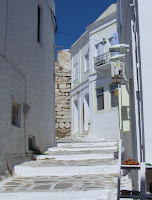
We spent one morning on the island of Paros' beaches. We strolled through the waterfront town's streets and buildings and stepped into a few boutiques and art shops. The architecture avails itself to some very colorful and rich photo opportunities.

On the island of Santorini, steep cliffs and very narrow roads abound. One of the best ways to reach the most remote beaches is to rent scooters and zip around and down to the shore. Local inquiries and maps help too! Many a tour bus could not go down side streets like we could. More than once we stopped at a street-side shop for olive, caper and grape hors d'oeuvres.

We at West Coast Sea Glass are grateful for the opportunity that our little business has provided us with to travel a bit and enjoy many beautiful oceans. For more photos of where we do most of our sea glass hunting, click here.