Tuesday, August 31, 2010

Specimens of Beauty - A Sea Glass Album


When does a piece of sea glass become a treasure or gem?  As with every lifelong hobby or art collection, the beauty is of course in the eye of the beholder.  Some of the most common or "industrial" glass shards can be sculpted beautiful by sand, wind and a rugged shoreline. And some are unique because they are highly uncommon in shape, stunning in color and a rarity to find.  Here we've compiled some of our favorite Specimens of Beauty simply because we love to share.  All photos copyright: WestCoastSeaGlass.com
--------------------------------------------------------
This rainbow stack consists of Pacific Ocean pieces that have been in our collection for decades.  We've hiked, kayaked, scaled steep cliffs and hiked some more to gather these rarities.  This stack represents finds that are of like symmetry, similar size and thickness and they represent a fine example of pristine weathering and conditioning. After years of studying the history and rarity of sea glass color we have learned that true orange (not beer bottle amber) is one of, if not the rarest color of sea glass.
--------------------------------------------------------
Red is highly coveted.  Some even call it the "holy grail" of sea glass. But this little delicacy is likely our most valuable find.  Why?  It's a vintage bottle stopper top first of all; probably from a victorian style perfume vial. It's old, historically nostalgic and flawlessly surfaced without chips or cracks.  Here it is photographed on an untouched beach in Hawaii.
--------------------------------------------------------
There are several kinds of multi colored or swirled glass.  We'll define three here.  Bonfire sea glass is glass that's been incinerated and the heat melts multiple vessels of varying colors together.  Another type of multi hued glass is flash glass.  This is not bonfire glass.  Flash glass is manufactured to have multiple colors usually of a base layer with a thin contrasting layer of another color flashed or fused to the surface.  The third kind of multi colored sea glass simply originates from refuse glass originally made by a manufacturer or blower. Above: The residual molten pieces were mixed together once various colored work projects were finished. They coalesced together in clumps, pieces or globs, then were "pitched" into the sea.  The surf tumbled the colorful shards smooth.
--------------------------------------------------------
Blues seem to catch the eye of the beach lovers and the romantics. Mirroring the color of the sea, these cobalt colored jewels most likely originate from medicine or even historic poison bottles.  It's nice to know that something as caustic as a bottle of poison has been recycled into something pure and soothing.  The pieces above have each been tumbling naturally from as many as forty to one hundred years.  Blue sea glass is one of the most popular colors that artists make jewelry with.  See Sea Glass Jewelry Here.
--------------------------------------------------------
Sea glass marbles are a true catch.  Just like a bottle stopper or vintage glass button, marbles once served a particular purpose at a particular place in time.  The sea didn't make them into marbles, they started out that way to begin with then somehow found themselves along the shore. The sea has rolled them around and pitted them for years.  We wrote an entire blog post about marbles and how they end up on the beach.  See Sea Glass Marbles Here

Thanks for sharing our love for sea glass, The collector/artists at:
Share

Wednesday, July 28, 2010

Creating Sea Glass Jewelry - A Day in the West Coast Sea Glass Studio

Share


The West Coast Sea Glass studio is a haven of color and creativity. We started out traversing the shores of the Pacific ocean decades ago. We've found rare pieces in every color over the course of our lifetimes. At left: A remote beach on Vancouver Island, Canada.

Our collection is decades old and most people have never seen a collection with as much color, history and variety. So we work hard to explain that ours is not average. It's an older collection, pieced together, one gem at a time, over decades.


Once back at the studio, we always place our pieces in baskets by color category and according to which body of water it was found along. At right: Baskets by color. More about color HERE.

When it's time to design a jewelry creation, just the right piece of sea glass is chosen. Today a very rare, true turquoise piece at left is chosen. The silver is measured, fitted around the piece, cut, soldered and sanded all by hand in our silver studio. No two pieces of sea glass are exactly the same, so the metal smithing process takes time and care.  Some days, we can spend eight hours at the bench grinder, sanding metal into shapes that fit the sea glass pieces.

After all the designing and fitting, the jewelry is polished with special tools, then polished again by hand with jewelry papers or cloth to make either a brushed finish to the metal or a silky, smooth shine.

Each creation is stamped with our signature "sea Star" mark on the back. This ensures its authenticity and workmanship and guarantees you it's a high qualiiy, West Coast Sea Glass piece. 

Left: A sterling silver and sea glass ring, hand made at our metal working station.
Share

Friday, April 9, 2010

Tuesday, March 9, 2010

Genuine, Authentic, Natural Sea Beach Glass or Machine Tumbled, Frosted Glass


The adoration of genuine, ocean tumbled sea glass has caused artificial, man-made frosted glass to show up on the modern market.  This mechanically created glass is not sea glass.  Real sea glass is glass that has spent time and a unique journey at sea.  It has stood the test of time and tide, often for decades.


This is what gives genuine, beach combed sea glass its value and significance. The process of mimicking the forces of nature cannot exactly be duplicated. Genuine, authentic sea glass is glass (a bottle, a dish, an old window pane) that was once unwanted and tossed out to sea as refuse.  It may have found its way to the shoreline after being thrown overboard from a ship.  It may have been barged out for dumping by a cargo ship.  Or it may have been pushed off the edge of a sea-shore town's landfill bluff.
  
No matter how the glass reached the ocean, we are finding that years and decades later, it can turn up along a beach as a gem with smooth edges and a frosty surface.

A truly mature piece can be so well rounded and without blemish that it looks more like a marble than a sharp edged shard.  Historic sea glass can still be found on beaches around the world bit it is getting more difficult to find the rarer colors and fully frosted conditioning.  Most of what is found today is liklely to be 100 years old or less.  Why?  Because mass production of bottles in the US began in the early 1900's.  That's when glassware became much more common in the average household and subsequently thrown out after being broken or unwanted.  Above left: Authentic, natural sea glass collected years ago by me from Pacific Ocean shores.


Some natural factors that help to create a high quality piece are: consistent, aggressive wave action, a rocky or pebbly shoreline, higher acidity content in the body of water and dramatic tides.  All of these factors can add to the quality of a good piece of well-frosted, authentic sea glass.


The Journey:  Most sea glass purists highly value the allure of the journey that the piece has been on.  How old is it?  What was it once a part of?  How did it end up here?  How long has it been carried and moved by the sea?  And who's hands have held it?


That frosty, pitted surface is what many sea glass hunters, historians and collectors admire.  At right: Machine tumbled, craft glass created for floral arranging and landscaping.  Though craft glass and machine tumbled glass can be pretty, it should not be called sea glass.  It's not been through the historic journey that (for example) a 1900's bottle or tableware piece has endured at the hands of the sea's unique conditioning and smoothing process.

Thank you, Mary Beth Beuke - West Coast Sea Glass
Share

Thursday, January 21, 2010

The Beauty in Sea Glass Collecting

"We are tied to the ocean. And when we go back to the sea, whether it is to sail or to watch - we are going back from whence we came."  J.F.K.


Whether an ocean lover, a nature adventurer or an archaeologist, the hunt for sea glass speaks to many of us.  Is it simply beach combing?  Is it hiking?  Is it artifact digging?  Perhaps it is something of all of these and more. I have spent a lifetime along the sea.  I have found myself there, gazing horizon-ward on days when nothing else seemed to make sense.  I have walked along the shore, I've sailed there, sang there and met storms there.

I am a product of the transformation of the sea.
Sea glass too is a remnant of sorts.  A rough and discarded shard; once useful, yet broken and tossed to the depths.  Nature over time, wind-sweeps us back and forth with the tide.  And along a journey.  Perhaps the beauty we find in collecting it comes from a bit of our own journey.

This deep lavender was photographed after an all day hike along one of Hawaii's southernmost shores. The journey was at a beautiful place but the act of discovering too was magical.  And the pieces found each had their own beauty also.
Once our finds are brought home.  They are poured out, their beauty is admired, the glass is washed gently and sorted by color.  Most collectors find the beauty in sea glass in both the hunting experience and in the displaying of it in a collection.

I sort by color or smoothness and  always categorize my glass according to where on this planet I found it (Pacific, Caribbean, Greece etc.).  Some collectors even create beautiful works of art with their historic glass shards.  


Tuesday, December 15, 2009

2010 Sea Glass Festival - Cape Cod, Hyannis, Massachusetts

Share
The 2010 Sea Glass Festival

will be held October 9th and 10th at the Cape Cod Resort and Conference Center
in Hyannis, MA.


This colorful, two-day, sea glass event is filled with exhibits, vendors, lectures and the Shard Of The Year Contest.


Sponsored by the North American Sea Glass Association, it is open to the public and to the world! Collectors from around the globe will converge on Cape Cod for this festive, jovial event that's dedicated to sea glass

Experience shard identification, oodles of artists , private collections, bottle experts, authors, photographers, and of course beautiful sea glass jewelry.
More on the Sea Glass Festival

Wednesday, November 18, 2009

Greek Islands and Sea Glass Hunting

Share
Twelve days in the Aegean Sea's Greek islands was a journey to remember. Posted By: Mary Beth Beuke
As serious sea glass hunters, being anywhere near the water is always what it's all about but being in the islands, walking through the teal blue waters and enjoying the warmth of the Mediterranean climate made for a sea glass collector's paradise.
Our first night in the historic city of Athens, we arrived just in time to experience a spectacular moonrise over the Acropolis. We boated from Athens to the island of Naxos and viewed beautiful, historical ruins right along the shore.

Several days were spent walking the beaches, hunting for sea glass and enjoying the sunsets.
Our friend and Sea Glass Journey book author Christeena, (she's the tan one) who resides in Greece much of the year and who's husband is a yacht captain, took us to a few spots on one of her favorite islands to sea glass collect.
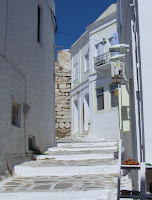
We spent one morning on the island of Paros' beaches. We strolled through the waterfront town's streets and buildings and stepped into a few boutiques and art shops. The architecture avails itself to some very colorful and rich photo opportunities.

On the island of Santorini, steep cliffs and very narrow roads abound. One of the best ways to reach the most remote beaches is to rent scooters and zip around and down to the shore. Local inquiries and maps help too! Many a tour bus could not go down side streets like we could. More than once we stopped at a street-side shop for olive, caper and grape hors d'oeuvres.

We at West Coast Sea Glass are grateful for the opportunity that our little business has provided us with to travel a bit and enjoy many beautiful oceans. For more photos of where we do most of our sea glass hunting, click here.

Tuesday, September 15, 2009

Treasures In the Sand - The Magic of Sea Glass

ShareTreasures in the sand: the magic of sea glass
A fascinating hobby that can become an addiction along local waters and beyond
Used By Permission - Thank you to Writer: Elise Pearlman
Photo above by Tracey Polach

August 20, 2009
In centuries and decades gone by, before the notion of recycling was even a twinkle in an environmentalist's eye, it was a common practice to toss unwanted bottles and other glass items into the sea. Unexpectedly these cast-offs have evolved into one of most sought after found objects ever wrought by nature: sea glass.

Bandied about by the unrelenting waltz of the tides, abraded by sand and transformed by the saltwater's special alchemy, coveted sea glass nuggets boast a faded, frosted patina and a softly rounded shape, although many pieces are triangular.

Found in a kaleidoscope of colors as diverse as the glass that gave rise to them — apothecary jars, ornamental glass, medicine, perfume and even poison bottles — the pieces, each as unique as a snowflake, glow like gems.
Photo by Maggie Parks Photography

Judy Moshan of Huntington Bay is one of many who have fallen under the spell of sea glass. While walking her yellow Labrador on the beach over the years, she said that she has been fortunate enough to amass a few hundred of these surprising jewels which she displayed in large jars throughout her house. While her collection is now being enjoyed by her daughter and young granddaughter, prized pieces included a piece of white sea glass flecked with lavender and a cornucopia of greens in shades ranging from aqua to emerald.

Pianist, author and artist Carol Montparker of Huntington used the sea glass that she collected on the local Crescent Beach to emulate the work of famous American sculptor Alexander Calder, and wrote about the experience in her book, "The Blue Piano and Other Stories."

"I saw a Calder 'fish mobile' in Venice about 12 years ago, and it stayed in my mind as being luminous, beautiful and witty," Montparker said. She created her own whimsical variation, augmenting her plentiful supply of green sea glass with the odd bauble, bead and even a single earring which flaunted a rare piece of red-orange sea glass.

Montparker's "rainbow trout" and "chub fish" now adorn her living room.

"There is hardly a person who enters the room who doesn't walk straight over to the pieces and asks where they came from, remarking on the sparkling 'scales' that throw kaleidoscopic reflections on the walls as the sun makes its way across the sky," Montparker said.

Tracey Polach, who has been collecting sea glass from the shores of Lake Erie for over 10 years and likes to go "glassing" after a good storm, says that the hobby is addictive. While some differentiate between beach or freshwater glass and sea glass, she believes that it's more about the special patina created by the properties of an individual beach.

Photo by Mary Beth Beuke

"The shape of the beach, the type of rocks or lack of rocks, the pH level [a measure of acidity and alkalinity of a solution], the type of surf the area has, all play a part in how the glass turns out," she said. "Lake Erie is fairly shallow compared to the other Great Lakes, and with a storm or wind change we get some pretty mighty waves which is why we get some nice glass here."

Lake Erie also has a pH level on a par with ocean water.

Marbles and apothecary stoppers are prized finds and happily Polach has had marbles roll up to her feet.

Polach, who goes by the name "beachglow" on eBay said that the jewelry that she creates often boasts shards of "sea pottery" and "end of the day" glass.

According to C.S. Lambert's "Sea Glass Chronicles: Whispers from the Past," many pieces of exquisite sea glass owe their existence to an English factory near Bristol which specialized in bottles and windows during the 18th century.

At the end of the day, workers combined the molten glass remains, resulting in a whimsical mix from which they created colorful glassware, Lambert indicated.


"These sea glass pieces that are washing up now were either discarded over the cliffs at the end of the day, or are from broken 'end of the day' glassware that was discarded as trash," Polach said. "I find it intriguing, almost haunting, to know that someone once used or loved that item that got broken or maybe lost, and I end up finding a piece of it years later."

Holly L'Hommedieu's love affair with sea glass began in early childhood. In 2003, the lifelong South Jamesport resident began to showcase in jewelry some of the exquisite glass that she found off Peconic Bay and Long Island Sound.

It is a way to treasure a piece and make it a focal point, L'Hommedieu indicated, adding that there are some pieces that she will never sell.

Remarkably, the ideal specimen, with rounded edges and no shinny spots, has been 40 years in the making, L'Hommedieu said.

In one of the foremost bibles on the subject, "Pure Sea Glass: Discovering Nature's Vanishing Gems," Richard LaMotte rates the rarity of the various colors based on more than 30,000 samples collected across the country. Although orange — most of which originates from tableware — tops the list, with the chances of finding a piece estimated at 10,000-to-1, red is the most coveted sea glass color, according to LaMotte. The color is so rare says LaMotte because of the expense: gold chloride produces the deep ruby-red color.

L'Hommedieu said that she has been lucky enough to find five red pieces during the course of decades of collecting, and she considers 2007 her banner year because of her discovery of a flawless piece of red sea glass.

Recycling and the advent of plastic and aluminum containers have put a dent in the amount of sea glass that she gleans from beaches, L'Hommedieu said, adding that she now supplements her supply with sea glass from Canada, Puerto Rico, Hawaii, California, Maine and the United Kingdom.

Sea glass from the U.K. can sell for as much as $100 per pound, she indicated. California still remains a hot spot in terms of the availability of sea glass, L'Hommedieu said.

The thrill of the hunt still makes her feel "like a kid in a candy store," L'Hommedieu said, adding that the prime time to go beachcombing is in the early morning or early evening at low tide when the broadest expanse of beach is exposed, and the sun's angle is such that its rays reflect off the glass.

L'Hommedieu warns the uninitiated to be wary of faux sea glass, which has been "machine tumbled" with grit to mimic the effects of Mother Nature.

She learned from reading LaMotte's book that there are features that no machine can duplicate, including tiny half-moon etchings created by the tossing back and forth of glass by the tides. Real pieces can also be identified by tiny chips which make them glitter while machine-tumbled glass has a "satin appearance," she said.


Wednesday, June 17, 2009

Art and Sea Glass Save Lives!

Share

As I drive through the hip, coastal art communities here along the Pacific coast, I often catch a glimpse of that famous bumper sticker proclaiming “Art Saves Lives”! Can it really? I ponder. Why yes! The music in my car stereo attests to this truth as it lifts my soul. The colorful mural I pass boosts up the otherwise ruddiness of the parking lot I pull into. I stop and slip into a gallery on this drizzly, looming afternoon. Dry and quiet now, my surroundings include; an abstract watercolor, a tribal mask and near the window, a teal art-glass vase spilling color up and out and overflowing into the gallery. My world has become a more beautiful place and this is just the perspective from my eyes!

Whether you’re an artist or someone who makes art supplies available to the art community, you are making the world a more beautiful place … and saving lives. How? According to a recent Washington State University article entitled “Why Do We Need Art”, we see that art has been a part of human culture, expression and survival for all of human existence. Ellen Dissanayake, affiliate professor at the UW school of music and author of “What is Art For” says “We don’t have a verb ‘to art’, but what are artists, dancers, poets doing? They’re taking the ordinary and making it special. You create a bowl out of mud but you don’t leave it ordinary, you make it special by engraving a pattern or figures on it. A poet takes ordinary words and makes them special. An artist places an activity or an artifact in a realm different from the everyday.”


That very artful expression is something that cultures throughout history have needed to survive. We need art as an avenue to express something in us and we need art in order to make exceptional, something that’s otherwise ordinary in our world. In a sense, art saves our lives from stagnation, meaninglessness and the ordinary. As Picasso has said "Art washes away from the soul the dust of everyday life."

Are you an artist? My guess is that there are times when you feel you must create to live, not because you need to sell something or to create an income (a nice benefit from living in a world that appreciates and understands the need for art) but because to create is to live and to live is to create!


A recent Seattle Times photographer viewed a piece of mine. Excitedly, he asked me to stand so he could photograph me with it. “That’s a work of art”! He proclaimed. I garnered more mileage and “life” out of his appreciation than I do when I sell a print of it. Why? Because even in a tough economy, while some people may perceive art as a “luxury item”, artists will still create, not always because it may stir up income but because we have for thousands of years and like those hip coastal community, car bumper stickers attest; Art Saves Lives!